Pull My Frank

Francis Arthur Norton IV

"A lifetime of global observation grounded locally in the colloquialisms of central North Carolina"

Latest
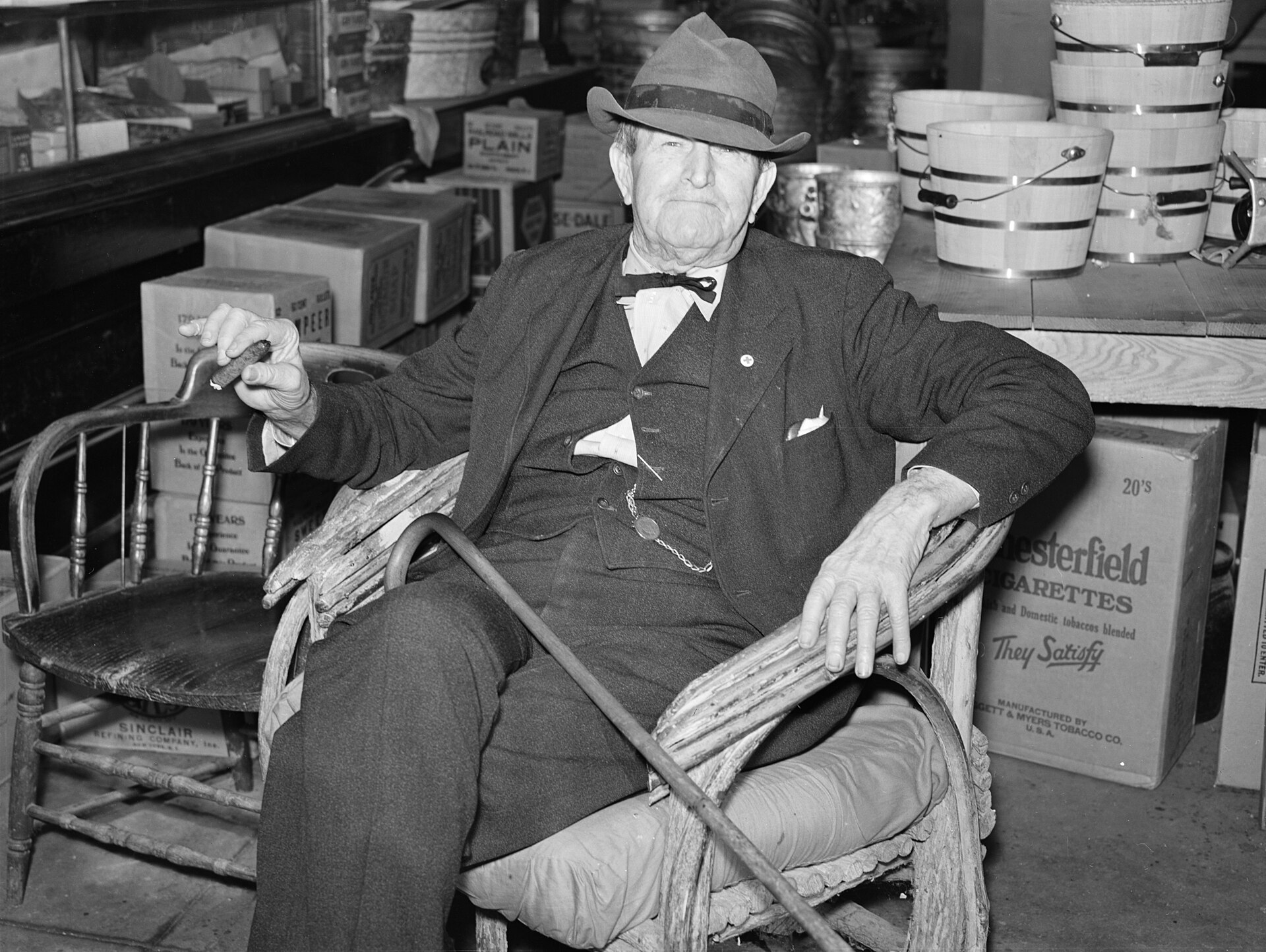
R. B. Whitley in his general store, Wendell, Wake County, North Carolina, September 1939. Photograph by Marion Post Wolcott for the Farm Security Administration. Marion Post Wolcott / Library of Congress — Public Domain

A Trillion Dollars Walked Out of the Room

Sometime in the last week of October, about a trillion dollars got up and walked out of the stock market. Nobody saw it go. It was not stolen and it did not burn. It simply stopped believing in itself. The occasion, the financial pages said, was a sudden worry about how much money the big technology companies are spending to build artificial intelligence, the server farms and the power lines and the chips, and whether any of it will ever be paid back. Google's parent company alone lost more than half a trillion dollars of value, which is more money than has ever been in Chatham County, counting the chickens.

That same stretch, the companies that make the memory chips those machines run on reported the biggest profits in their history. So the money is not gone, exactly. It has just moved from the people selling the dream to the people selling the shovels, which is what has happened in every gold rush since there was gold.

I have been looking at a photograph Marion Post Wolcott took in September of 1939, in a general store in Wendell, over in Wake County. The man in the chair is R. B. Whitley. According to the government's caption, he owned the store and was president of the bank. He sits there in a good hat and a bow tie, with a cigar and a cane, surrounded by wooden buckets and a case of Chesterfields, and he does not look like a man who has ever been surprised by a quarterly report.


Continue reading →

The Church Sign Wars of Route 64

First Baptist started it with a pun about heaven. The Methodists answered within the week. By August it was theology by roadside marquee, and the whole county slowed down to read.

Read more →

Miss Odessa's Nine-Layer Rumor

A rumor in this county is like Miss Odessa's famous cake: it arrives in layers, and by the time you reach the bottom you have forgotten what the top was about.

Read more →

The Line at the Fitts Center

I voted early, in a line that ran out the door of the Earl B. Fitts Community Center and most of the way to the street. Nobody in it agreed about much. Everybody in it knew what a dozen eggs cost.

Read more →

The Spreadsheet and the Sweet Tea

A consultant flew in to tell us our productivity was down. He had a spreadsheet. We had the tea. One of these instruments has survived three recessions and a divorce.

Read more →
FROM THE READERS

My frank is out! As of yesterday!

A good neighbor is a man who will help you move a body and never ask whose. I have three. I have never needed them to prove it, which is the whole point.

Every departure is a theory. Every arrival is the correction.

They say travel broadens the mind. After forty-seven countries I can confirm: it mostly broadens the waistline and the credit card bill. The mind was already broad enough — it just needed a window seat.

A map from 1920 North Carolina. The Economist measures the world. The map shows where it should be.

The problem with reading The Economist is you start thinking in graphs. The problem with living in Chatham County is you start thinking in stories. I recommend the stories. The graphs lie more often.

The press rolls. The record bends.

The New York Times thinks it understands the South. Bless their hearts.

A Linotype machine. The newsroom: where confidence is manufactured daily.

If the Wall Street Journal were a person, it'd be that cousin who got rich and forgot where he came from. I used to admire the prose. Now I just admire the audacity.