Sometime in the last week of October, about a trillion dollars got up and walked out of the stock market. Nobody saw it go. It was not stolen and it did not burn. It simply stopped believing in itself. The occasion, the financial pages said, was a sudden worry about how much money the big technology companies are spending to build artificial intelligence, the server farms and the power lines and the chips, and whether any of it will ever be paid back. Google's parent company alone lost more than half a trillion dollars of value, which is more money than has ever been in Chatham County, counting the chickens.
That same stretch, the companies that make the memory chips those machines run on reported the biggest profits in their history. So the money is not gone, exactly. It has just moved from the people selling the dream to the people selling the shovels, which is what has happened in every gold rush since there was gold.
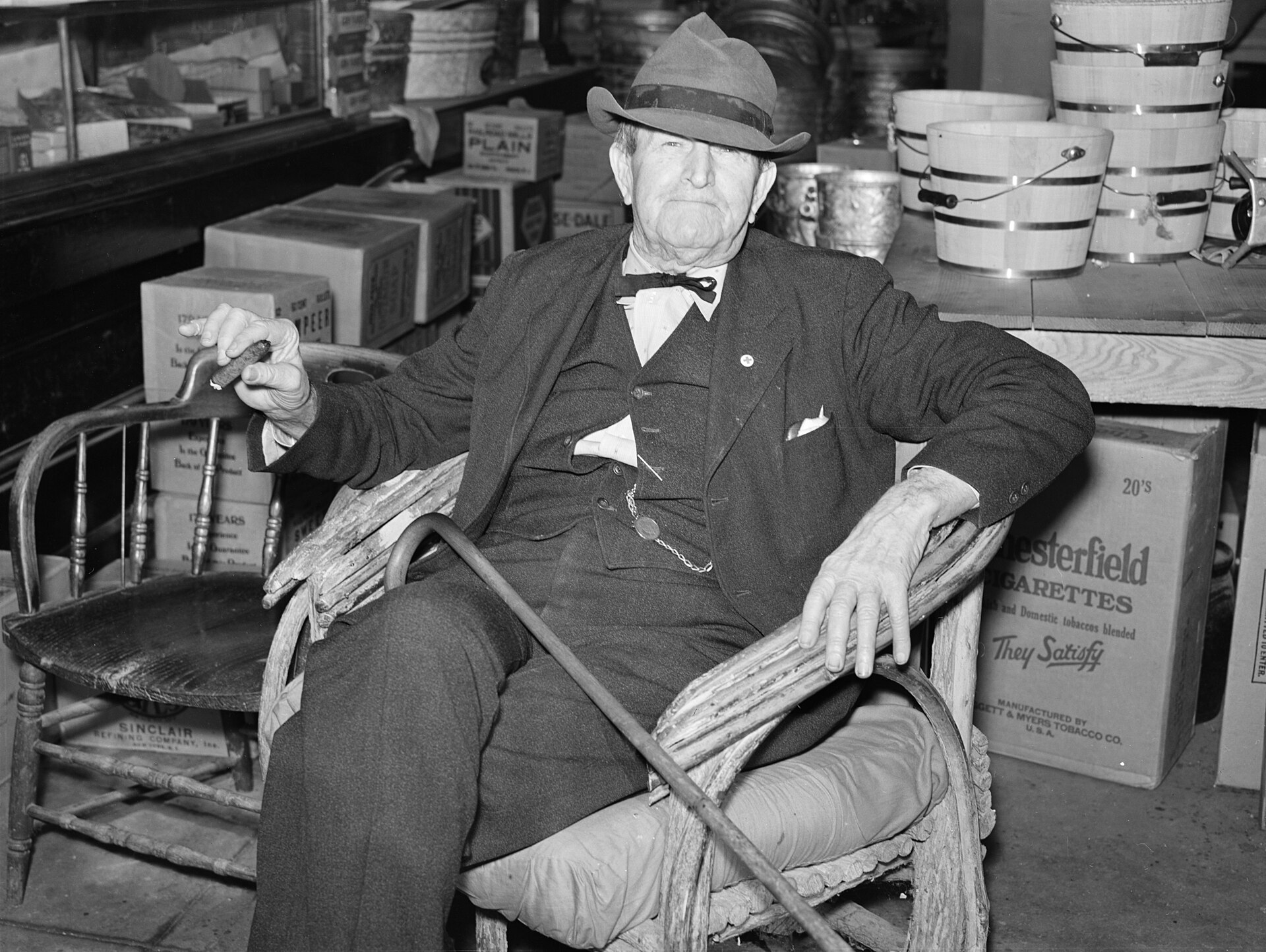
I have been looking at a photograph Marion Post Wolcott took in September of 1939, in a general store in Wendell, over in Wake County. The man in the chair is R. B. Whitley. According to the government's caption, he owned the store and was president of the bank. He sits there in a good hat and a bow tie, with a cigar and a cane, surrounded by wooden buckets and a case of Chesterfields, and he does not look like a man who has ever been surprised by a quarterly report.
He did not need a forecast. He knew what his customers could afford because they came in and sat down next to him and told him, and if they could not pay he knew that too, and he had known their fathers. His whole risk model fit inside one room. I am not saying it was a better economy. It was a hard time to be poor in North Carolina, and the government sent photographers south precisely because it was. I am only saying that the trillion dollars that walked out last month did not know anybody's name, and I suspect that is why it found it so easy to leave.
Join the conversation.
Login RegisterNo comments yet. Be the first to leave a mark.