The Siler City board met on the fifth of October and dealt, in a single evening, with the past and the future, which is more than most of us manage in a year. The past came in the form of $22,294.32 in state unemployment bills from 2024 and 2025 that had gone unpaid under a previous finance director and only turned up when the new staff went looking for the password to the account. The state, to its credit, charged no penalty. The board was asked to pay it out of the fund balance and move along, which is the correct thing to do with most of the past.
The future came in the form of an eighteen-month work plan for downtown, written by four committees, with more than two dozen action items and the stated goal of making the place "an authentic destination for food, arts and belonging." I like that last word. I have never seen a town plan use it before. Belonging is not usually a line item. You cannot pave it, and the state does not reimburse it.
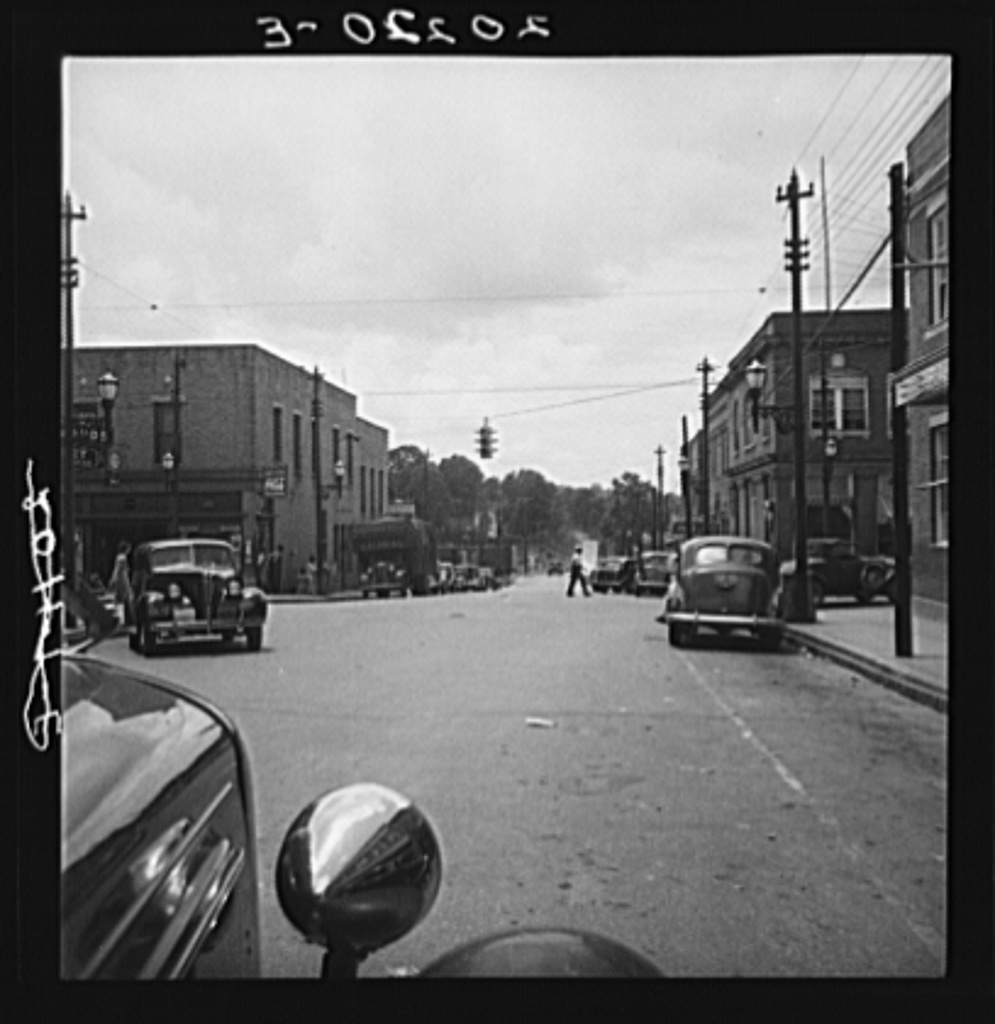
In July of 1939 Dorothea Lange came through Siler City and took a picture from the seat of a car. You can see the curve of the fender and a lamp in the bottom of the frame, a traffic light strung on a wire over the street, brick storefronts, a few cars parked along the curb, and one man crossing in no hurry at all. She did not stay long. Photographers for the government rarely did. But she looked, and the town held still for her, and that picture is still the best evidence I know that downtown was once a place people came to on purpose.
Here is what I would tell the committees, if anybody asked, which they have not. The authentic part takes care of itself. We have been authentic around here for a long time without trying. The food is a matter of money and nerve. But belonging is built the way the old men built it outside the hardware store: by somebody being there, at the same hour, on the same bench, for long enough that their absence would be noticed. Pay the old bills. Then put out a bench. Then sit on it.
Join the conversation.
Login RegisterNo comments yet. Be the first to leave a mark.